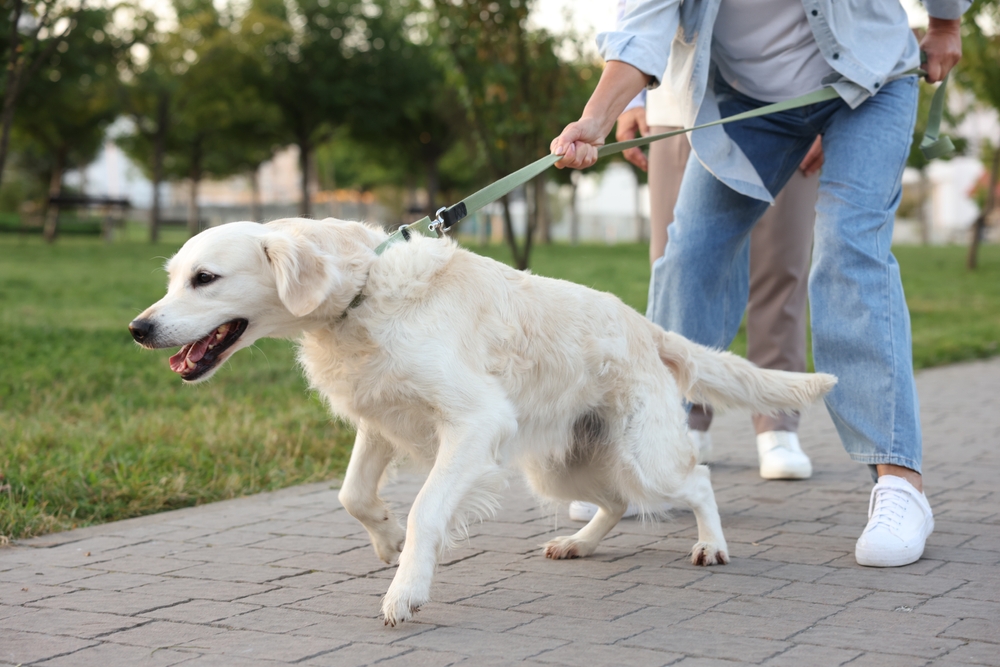
Walking a dog can look like one of the easiest things in the world. You clip on a leash, open the front door, and enjoy a peaceful stroll through the neighborhood, right?
But only we pet parents know the real deal. Remember those times when your dog was trying to chase a squirrel, and you were yelling commands? A lot of times, dog walks end up with both of you returning home completely exhausted.
And sometimes, the problem isn’t your dog. Professionals keep talking about some critical mistakes that pet parents often make. These dog-walking mistakes can not only make walks feel stressful but also trigger anxiety, cause physical injuries, and ruin your dog’s behavioral training.
If you want to turn your daily chaotic stroll into a relaxing, deeply bonding experience, here are 8 major dog walking mistakes you need to stop making right now.
1. Turning the Walk Into a High-Stakes Tug-of-War

If a dog lunges forward, the owner instantly yanks the leash back with a sharp jerk. It’s a very common instinctual reaction, but it can do more harm than good.
A dog’s neck has their thyroid gland, trachea, and delicate blood vessels. Repeatedly jerking the collar may cause windpipe damage and likely spike their stress levels.
Pulling back on the leash can also encourage your dog to pull against the pressure rather than teaching them what you want them to do.
So what you can do is ditch the force and practice loose leash walking. When the leash goes tight, stop moving completely. Wait for your dog to turn around and look at you. When the leash slacks, reward them with a high-value treat and start moving again. You want to teach them that a loose leash gets them places, not a tight one.
2. Treating the Outing Like a Military March (Skipping the “Sniffari”)

Many owners focus only on exercise. They keep their dog moving from one point to another without giving them time to stop and sniff.
But dogs need to sniff. Their sense of smell is up to 100,000 times stronger than ours, and sniffing helps them understand what is happening around them. Taking that away can leave them bored and frustrated.
Try splitting the walk into two parts. Spend half the time on a structured walk where your dog stays beside you and the other half sniffing. Let them slow down, follow their nose, and explore safe areas.
A few minutes of focused sniffing can be surprisingly tiring, especially for a dog with lots of energy.
3. Relying on Dangerous Retractable Leashes

Retractable leashes can look very convenient with those thin, plastic retractable (flexi) leashes that can extend up to 20 feet. They can give dogs more freedom, but they’re not ideal for every walk. Their extra length can make it harder to quickly control your dog around traffic, unfamiliar dogs, or crowded areas.
A better alternative is a sturdy, fixed 4-to-6-foot nylon leash. If you have a heavy puller, stop clipping the leash to a standard neck collar. Instead, switch to a front-clip, Y-shaped dog harness. This gently redirects their forward momentum without choking them or restricting their natural shoulder movement.
4. The “7-Second Rule”

It’s easy to fall into a strict routine, and dogs love it too. But heading out at 5:00 PM every day without checking the outdoor conditions, especially during seasonal shifts.
Also, concrete and asphalt trap heat. Even when the weather feels fine, the ground can still hurt your dog’s paws. Hot pavement can burn their paw pads, while road salt in winter can cause painful irritation and burns.
Always use the 7-second pavement test before stepping out. Touch the back of your bare hand firmly against the sidewalk. If you can’t comfortably hold it there for 7 seconds, it is far too hot for your dog. Stick to early morning walks, walk exclusively on the grass, or invest in a good pair of protective dog booties.
5. Walking in a “Smartphone Zombie” Trance

We live in a very distracted world, and owners often scroll through social media or answer emails while their dog walks themselves.
When you’re busy looking at your phone, you can easily miss what’s happening around you. Your dog might pick up something dangerous from the ground, or you might miss small signs that they feel nervous or uncomfortable. Put the phone away and keep an eye on your dog during the walk.
The daily walk is supposed to be a shared experience. Pay attention to your dog, praise them when they look back at you, and stay hyper-aware of your surroundings. It keeps them safe and significantly strengthens your bond.
6. The “My Dog is Friendly!” Illusion

Allowing your leashed dog to march right up to every single strange dog they cross paths with on the street is a massive behavioral blunder.
Just because your dog is social doesn’t mean the other dog is. The oncoming dog might be fearful, recovering from surgery, or dealing with severe leash reactivity.
Furthermore, forcing two dogs into a tight, face-to-face greeting while trapped on short leashes creates intense pressure and frequently triggers defensive dog fights. Always advocate for your dog’s space and respect others.
7. Treating Water Like an Afterthought

Long summer walks and weekend hikes mean one thing you should never forget: water for your dog.
Dogs don’t cool down by sweating as we do. They mainly rely on panting to cool themselves so they don’t overheat and become dehydrated quickly. In serious cases, overheating can lead to life-threatening heatstroke.
If you’re going to be outside for more than 20 minutes, carry fresh, cool water and a collapsible bowl. Give your dog regular water breaks, especially when you’re resting in the shade. Don’t wait until the walk is over to offer them a drink.
Conclusion
A daily walk doesn’t have to feel like another task on your list. It can be your dog’s favorite part of the day, and maybe yours too. Slow down, let them sniff, bring what they need, and enjoy the time together.
Avoiding these common dog-walking mistakes can make every walk safer, happier, and a little more special for both of you.
